Kim's one-day China trip renews speculation over Trump-Kim talks ahead of China-hosted APEC summit
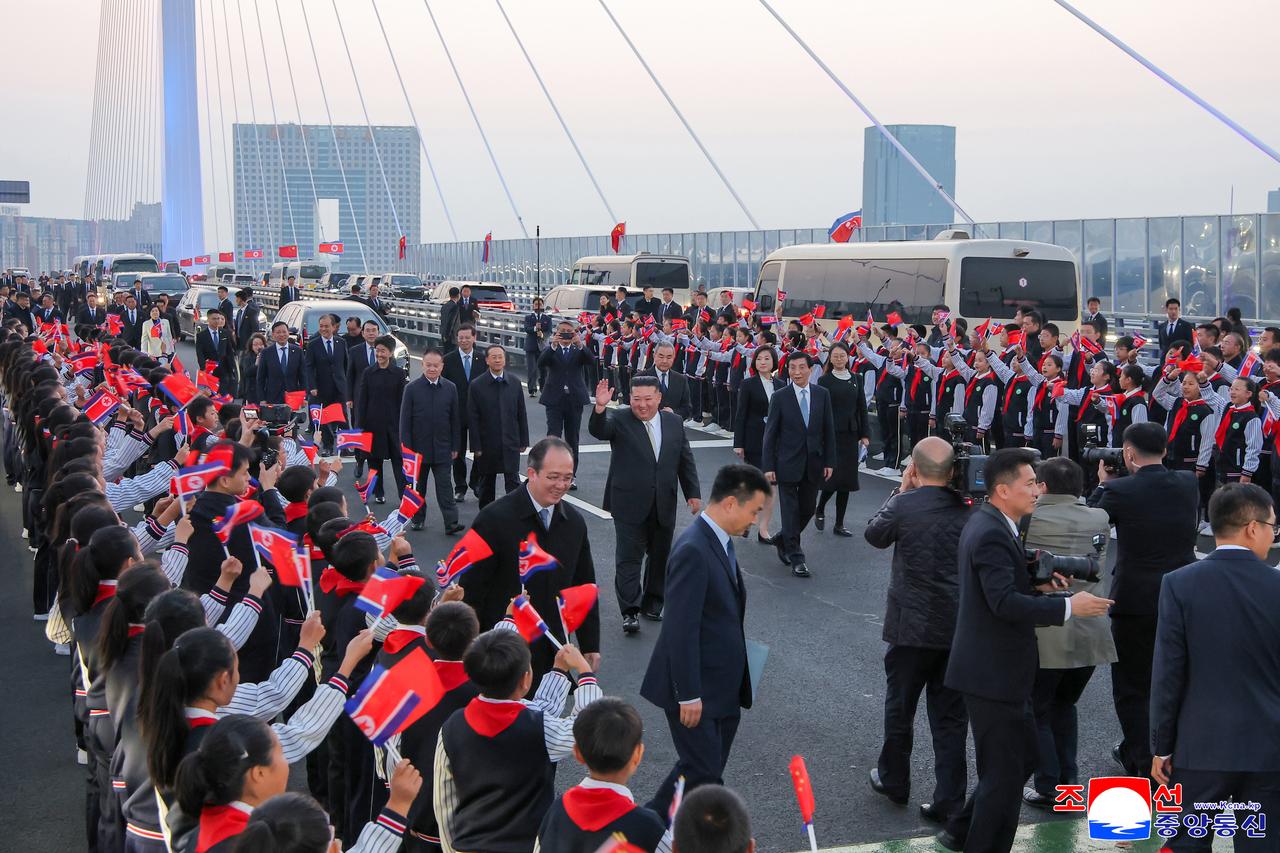
North Korean leader Kim Jong-un's whirlwind one-day visit to China's border city of Dandong on Saturday brought together two defining features of Pyongyang's relationship with Beijing: A longstanding alliance rooted in the Korean War and the prospect of expanded economic cooperation.
The trip, Kim's sixth to China overall and his first in 13 months, came just nine days after the long-delayed opening of a bridge expected to boost cross-border trade. It also fell on the eve of a major Chinese commemoration of its intervention in the 1950-53 Korean War.
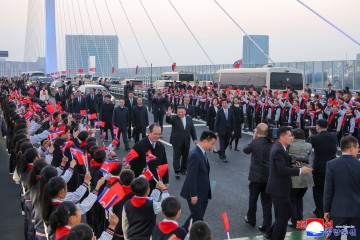
In a departure from his customary train travel, Kim used the New Yalu River Bridge, a four-lane, roughly three-kilometer span linking Dandong with the North Korean city of Sinuiju, to cross into China in a motorcade.
The visit unfolded against a broader diplomatic backdrop, with Beijing preparing to host the Asia-Pacific Economic Cooperation summit in Shenzhen next month, amid speculation about whether the gathering could provide an opening for renewed talks between Kim and US President Donald Trump.
Joung Eun-lee, director of the North Korea Research Division at the government-funded Korea Institute for National Unification, saw a broader diplomatic calculus behind Kim's brief visit.
“Chairman Kim Jong-un’s visit to China appears to have been driven by a combination of multiple objectives, including reaffirming political and military ties (with Beijing), expanding economic cooperation and the prospect of North Korea-US dialogue ahead of the APEC summit,” Joung told The Korea Herald.
"What is particularly noteworthy is that Chairman Kim personally visited China. If the purpose had been simply to expand economic cooperation or strengthen friendly relations, a high-level delegation could have made the visit," Joung added.
Joung further explained that “this suggests that the visit may have had a more significant strategic purpose," while emphasizing the significance of Kim usng the newly opened bridge.
"This can be seen as a symbolic gesture demonstrating North Korea's determination to expand economic cooperation with China in earnest," she said.
Kim’s pragmatic diplomacy bridges past, future
Lim Eul-chul, a professor at the Institute for Far Eastern Studies at Kyungnam University, described the visit as an example of "Kim Jong-un-style pragmatic diplomacy."
By invoking the two countries' shared wartime history and reaffirming their long-standing alliance, Kim sought to reinforce the political foundation for closer economic ties with Beijing, while signaling his determination to expand cross-border trade and exchanges through the newly opened bridge, Lim said.
"By personally endorsing the official opening and historic mission of the New Yalu River Bridge, which had remained unused for 12 years after its completion, Kim demonstrated his commitment to and expectations for expanding trade and economic cooperation through the bridge," Lim said.
The bridge's opening on Oct. 15 came just over a month after North Korea and Russia inaugurated a road bridge across the Tumen River on Sept. 7, suggesting Pyongyang is seeking to expand economic ties with both neighbors rather than deepen its reliance on China alone.
Lim said the visit allowed Kim to "reestablish an optimal diplomatic position with both China and Russia at his back by reaffirming the military and historical alliance forged in blood with China."
Wartime history meets economic ambitions
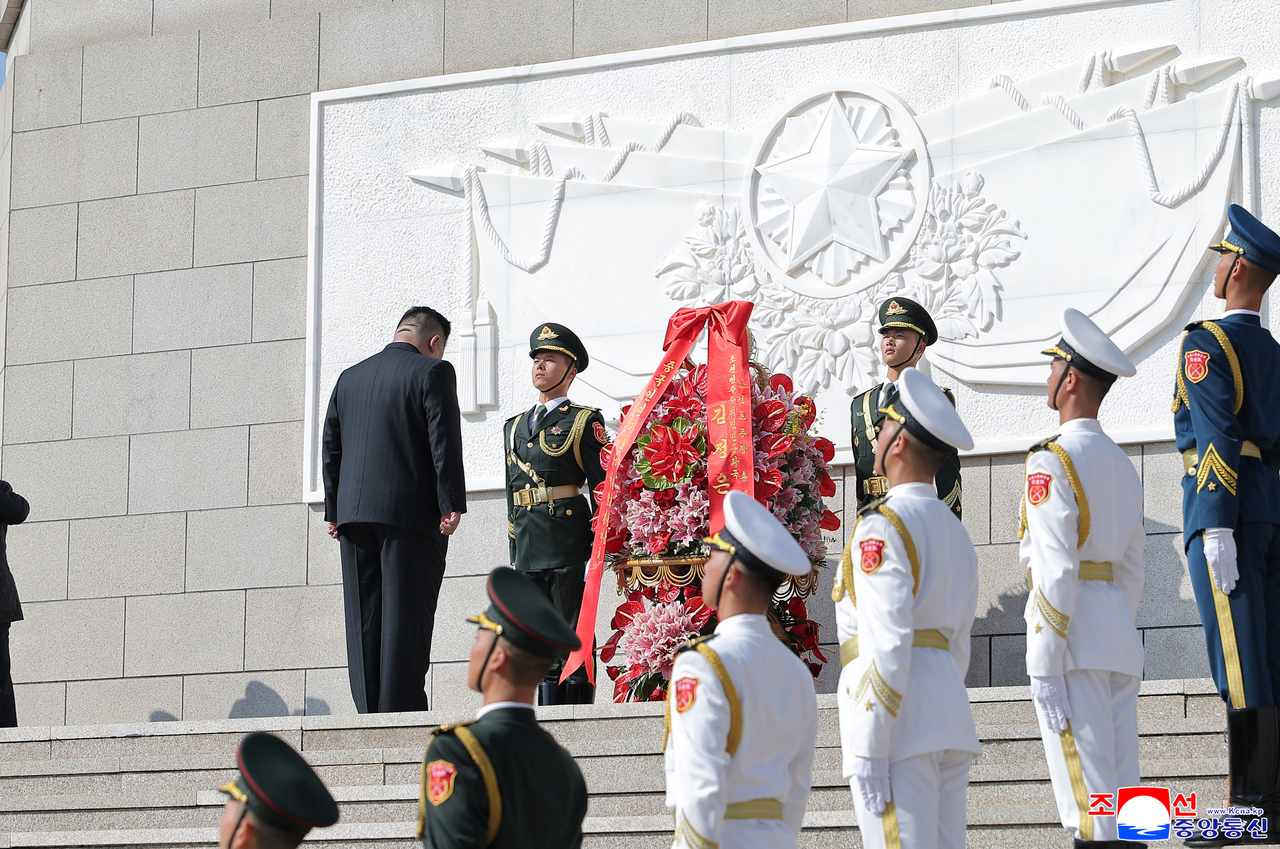
North Korea's state-run Korean Central News Agency reported Sunday that Kim had visited the Memorial Hall of the War to Resist US Aggression and Aid Korea in Dandong the previous day, ahead of the Oct. 25 anniversary of China's entry into the Korean War, and paid tribute to Chinese soldiers who fought in the conflict.
Kim emphasized that the memorial hall was “a precious testament, sealed in blood, to the invincible friendship between the DPRK and China," referring to North Korea by the acronym of its official name.
Kim further “affirmed the unwavering determination of our Party, government and people to eternally remember and uphold the glorious history of overcoming trials together, and to steadfastly carry forward for all time the invincible DPRK-China friendship forged in blood,” KCNA reported.
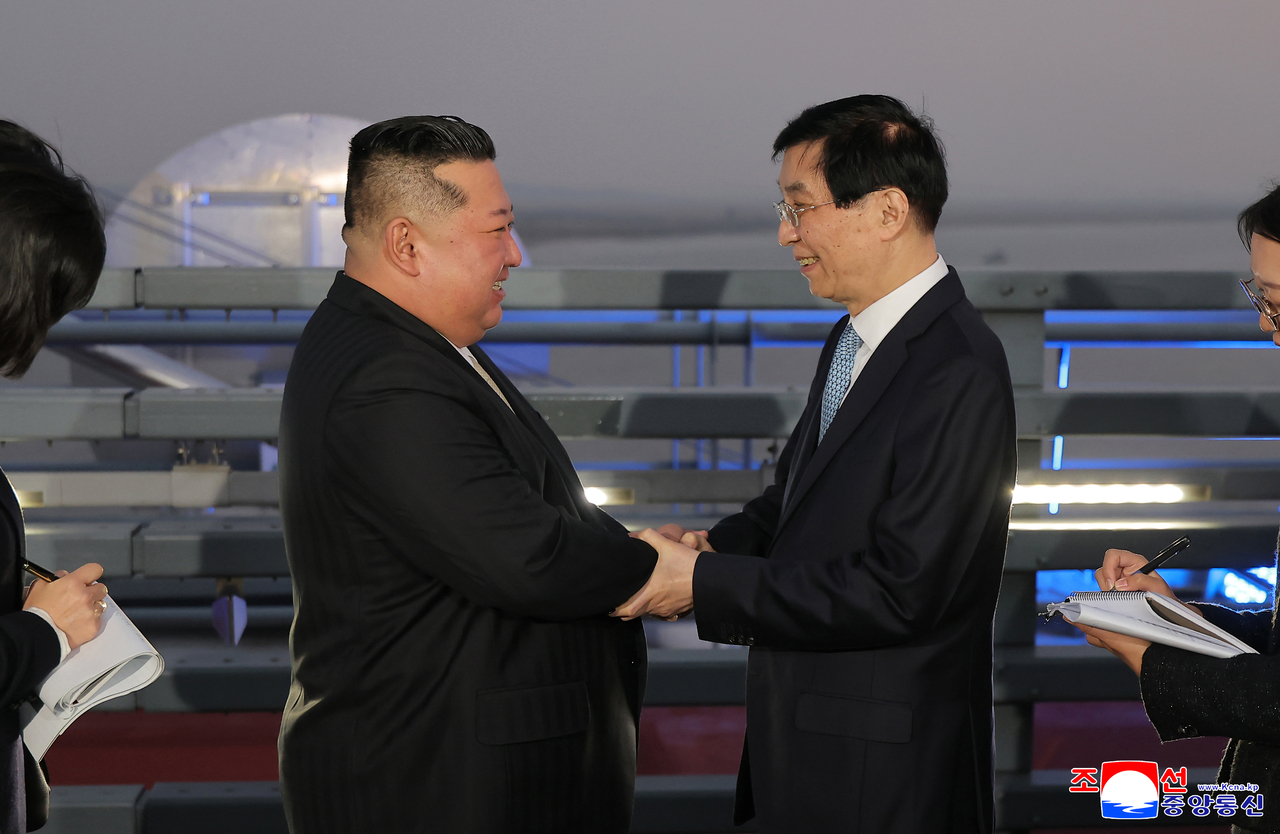
After touring the memorial, Kim met China's top political adviser Wang Huning, who hosted a banquet in Kim's honor under President Xi Jinping's special instructions, according to KCNA. Wang is China's fourth-ranking official and a longtime adviser to Xi, widely regarded as a key ideological architect of the Chinese Communist Party.
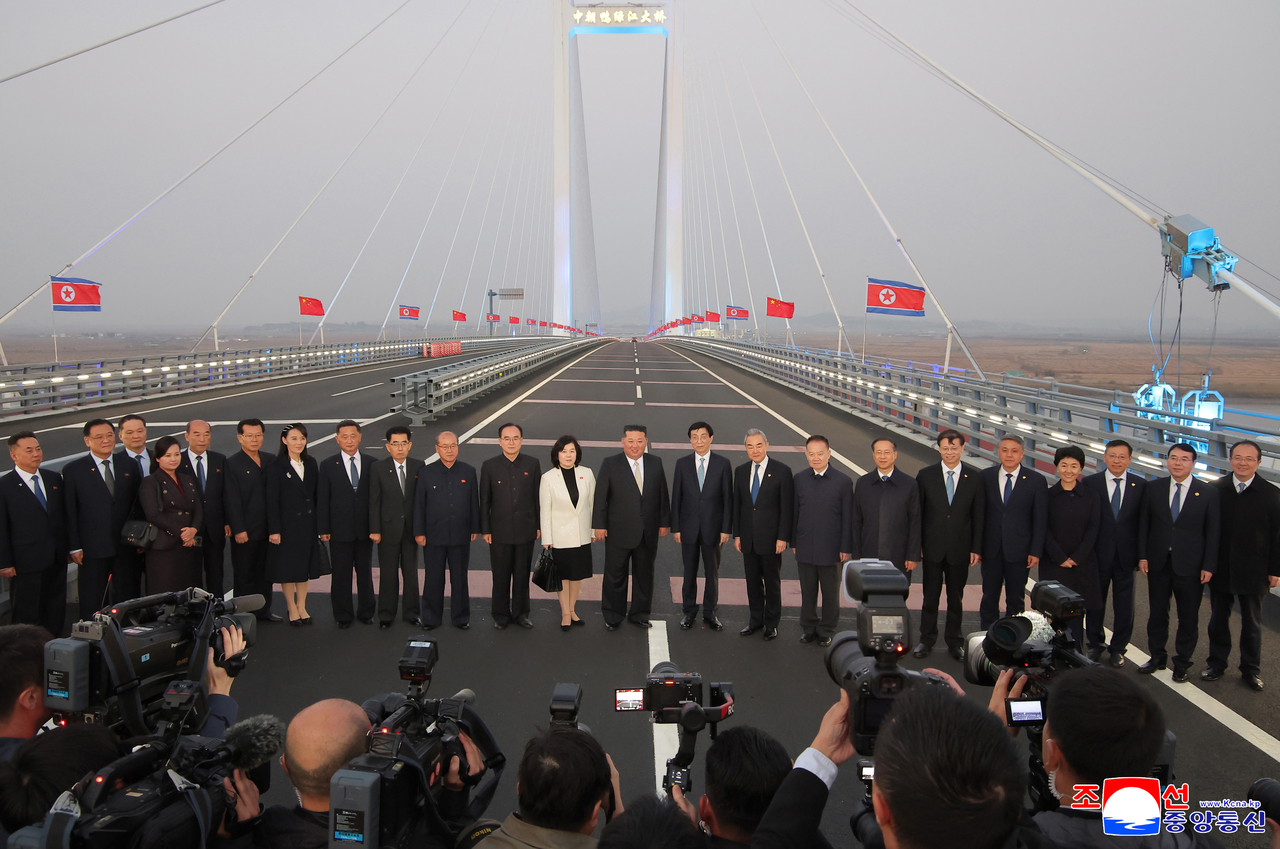
Kim also inspected a bus factory in Dandong before crossing the New Yalu River Bridge on his return journey. At the bridge's midpoint, he expressed hope that it would "without doubt faithfully fulfill its historic mission of connecting the two countries and binding our hearts even more firmly together," KCNA reported.
Michael Bosack, founding director of the Parley Policy Institute and a former UN Command official, said the visit reflected a shift in North Korea's domestic propaganda, which in recent years had portrayed Russia as a more reliable partner than China.
"The Kim-Xi summit in June prompted the shift, and with the Dandong visit, the Kim regime is taking another notable step in choosing to highlight China's involvement in the Korean War," Bosack told The Korea Herald.
Yang Gab-yong, a senior research fellow at the Institute for National Security Strategy, said Kim's brief visit was "a natural visit to China on an occasion marking the elevation of bilateral relations to a strategic partnership," following Xi's state visit to Pyongyang in June.
The visit also came in the 65th anniversary year of the Treaty of Friendship, Cooperation and Mutual Assistance, signed on July 11, 1961, which commits either country to provide immediate military and other assistance if the other comes under armed attack and enters a state of war.
Yang said Kim's decision to visit Dandong on the eve of Oct. 25 anniversary was intended to "highlight the significance of the 65th anniversary of the treaty between the two countries."
Beyond its historical symbolism, Kim's visit to the Huanghai Bus factory in Dandong also reflected North Korea's economic priorities, particularly its push to develop local industries under the Regional Development 20×10 Policy.
“China's experience and support are important for North Korea's economic development, and drawing on China's experience is particularly important for regional economic development within North Korea, especially in manufacturing,” Yang told The Korea Herald.
Trump-Kim summit speculation
While neither Beijing nor Pyongyang explicitly mentioned North Korea-US dialogue in their official accounts of the visit, analysts were divided over whether the discussions would have touched on prospects for renewed talks between Washington and Pyongyang.
Joung of KINU said she believed that "the issue of North Korea-US dialogue may have been one of the main agenda items discussed during the meeting."
"Above all, it is significant that Kim Jong-un personally visited China at a time when the possibility of a meeting between the North Korean and US leaders is being discussed ahead of APEC," Joung said.
Joung pointed to the presence of Chinese Foreign Minister Wang Yi and North Korean Foreign Minister Choe Son-hui as particularly noteworthy, suggesting that the two sides may have exchanged views on prospects for US-North Korea talks.
Kim's meeting with Wang, just ahead of the fifth plenum of the Chinese Communist Party's 20th Central Committee, scheduled for Monday through Thursday, also suggested that Beijing's top leadership attached considerable importance to the visit.
"It is possible that Wang conveyed Xi's intentions to Kim while seeking to gauge the North Korean leader's position," Joung said. "Therefore, this visit to China can be seen as serving not only the immediate goal of expanding North Korea-China economic cooperation but also as strategic communication with an eye toward the possibility of future US-North Korea dialogue."
Yang offered a more cautious assessment. "Although neither country's official account mentioned the issue, the fact that Wang Yi and Choe Son-hui met means the possibility of discussions on the (North Korea-US) agenda cannot be entirely ruled out," Yang said.
Yang further explained that "North Korea-China relations fall under the purview of (China's) International Department, while multilateral meetings fall under the purview of the Foreign Ministry."
Bosack, however, doubted that US-North Korea dialogue had been discussed at all during the Dandong meeting.
“This was a short visit filled with commemorative activities. I am doubtful that Choe Son-hui and Wang Yi had much time for meaningful deliberations. More likely, they affirmed next steps for working level engagements,” Bosack said. “I see this visit as being more symbolism than substance.”
dagyumji@heraldcorp.com